Shaping the ground so water leaves
Yard Grading & Regrading in Nashville, TN
Grading is the shape of the ground. Before any pipe is considered, the question is whether the surface itself directs water away from the house and toward a place where it can leave. Where it does not, no amount of drainage hardware fully compensates.
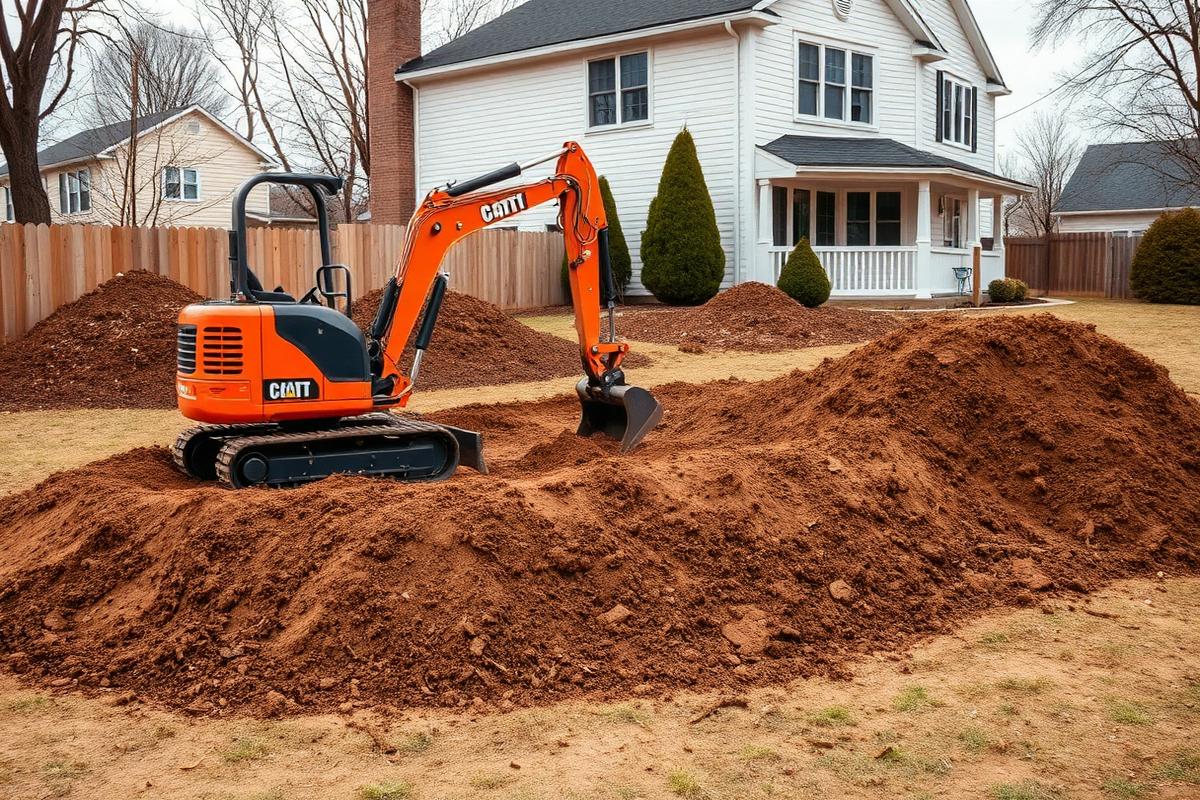
Regrading reshapes the soil to remove low spots, restore positive fall away from structures, and create a defined path for surface runoff — sometimes as the entire solution, sometimes as the foundation for a piped system.
Symptoms
Signs you are dealing with this problem
- Ground that slopes toward the house instead of away from it
- A birdbath low spot in the middle of an otherwise flat lawn
- Settled soil against the foundation or around utility trenches
- Water crossing the yard in an uncontrolled path after storms
- Soil washing off a bare slope after heavy rain
- Mulch beds that trap water against the house
When this solution fits
- Negative slope toward a foundation, patio or crawl space
- Shallow, broad ponding rather than a single deep low spot
- Preparing a yard before sod, turf, landscaping or hardscape work
- Backfill settlement around a newer home
How it works
How this drainage work is typically done
- Step 01
Shoot the existing grade
Elevations are checked across the problem area to identify where the surface actually falls, where it flattens, and how much fall is available to work with.
- Step 02
Establish fall away from structures
Soil is cut and filled to create a consistent slope away from the foundation for the first several feet, then a continuous path toward the intended discharge area.
- Step 03
Reshape low areas
Depressions are filled and compacted in lifts so they do not settle back, and the surrounding grade is feathered so the fix is not visible as a mound.
- Step 04
Stabilise the surface
Topsoil, seed, sod or erosion control is placed so the new grade holds through the first rains rather than washing back into the low spot.
Local context
How this plays out in the Nashville area
Newer subdivisions across the Nashville metro often have engineered lot grading that works on paper, but settles. Backfill around foundations and utility trenches compacts over the first several years and can quietly reverse the intended slope.
Rolling terrain across Williamson, Davidson, Sumner and Rutherford counties means many yards have plenty of natural fall — the issue is that the fall is interrupted by a terrace, bed, wall or flat pad where water stops.
Clay soil holds its shape well once compacted, which makes grading durable here, but it also means a poorly compacted fill will settle unevenly and recreate the low spot.
Related alternatives
- Drainage swale
When runoff volume is high, shaping a defined swale channel gives the water a route rather than just a general slope.
- French drain
Where the soil stays saturated below the surface, grading alone will not remove the water and a drain line is needed.
Questions
Frequently asked questions
Keep reading
Related drainage services
Free drainage estimate
Tell Us What Is Happening on Your Property
Send the details of your drainage problem and your project can be reviewed by a local drainage professional serving your area. There is no cost to submit a request.
- 1Tell us your ZIP code and drainage problem
- 2Add your name and phone number
- 3Get matched with a local drainage professional
Get a Free Yard Drainage Estimate
Tell us what’s happening on your property and request local drainage pricing.
No obligation. Takes less than a minute.
Step 1 of 2